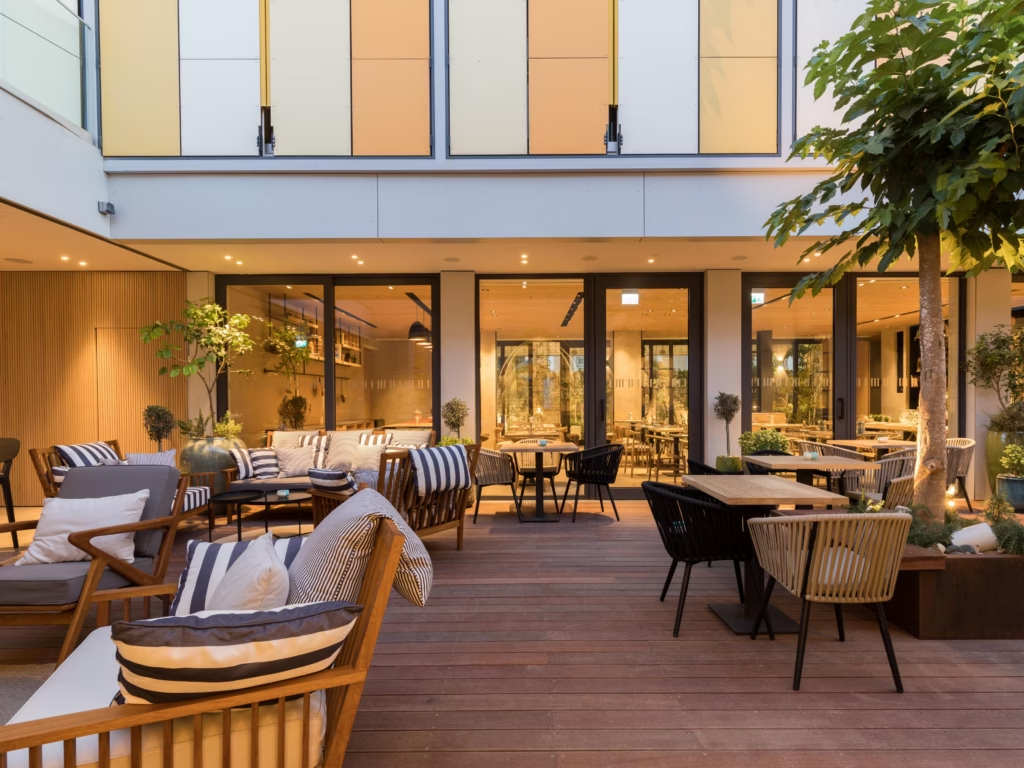
How tourism in Cyprus’s most soulful coastal city is reshaping intimate luxury in 2026.
Once seen mainly as Cyprus’s gateway thanks to its international airport, Larnaca has quietly transformed into one of the Mediterranean’s most promising boutique tourism destinations. In 2026, the city stands at the heart of a new travel narrative – one driven not by mass resorts, but by carefully curated, design-led hospitality experiences.
Over the past few years, a wave of boutique hotel investments has breathed new life into Larnaca’s historic center, seafront and emerging cultural districts. From restored neoclassical townhouses to contemporary waterfront retreats, these properties offer travelers something increasingly valuable: authenticity. Guests are no longer just visiting Larnaca; they are living it – waking up in heritage buildings, dining in locally sourced restaurants, and exploring neighborhoods beyond the typical tourist map.
This shift has had a measurable impact on tourism patterns. Boutique hotels attract higher-spending, experience-focused travelers who tend to stay longer and engage more deeply with the local economy. Independent cafés, galleries, wellness studios, and concept stores have flourished around these hotels, creating micro-ecosystems of culture and commerce.
For investors, Larnaca presents a compelling proposition in 2026. Compared to more saturated Cypriot destinations, the city still offers relatively accessible real estate opportunities, strong year-round demand, and growing international visibility. With direct flights increasing and digital nomads favoring smaller, lifestyle-driven cities, occupancy rates for boutique properties continue to rise.
Ultimately, the boutique hotel boom is not just upgrading Larnaca’s accommodation offering; it is redefining its identity. The city is evolving from a transit point into a destination in its own right: slower, more soulful, and perfectly aligned with the global shift toward meaningful, personalized travel.